
Your septic system needs regular pumping every three to five years, and Miller’s Septic Tank Cleaning handles that along with system maintenance, leach line rejuvenation, point-of-sale inspections, tank locating, and riser installations for homeowners across Northeast Ohio.
Most homeowners don’t think about their septic system until something goes wrong — a slow drain, standing water in the yard, or an odor near the tank. By that point, the repair bill is usually higher than the cost of routine service would have been.
We’ve served Northeast Ohio homeowners since the 1980s, and we’ve found that the difference between a system that lasts decades and one that fails early usually comes down to scheduled attention.
Routine Septic Care
Most septic failures in Northeast Ohio start with a tank that went too long between pumpings or a system nobody checked. Regular pumping, scheduled inspections, and knowing exactly where your tank sits are the three habits that keep repair bills down.

Septic Tank Pumping
Solids settle at the bottom of your tank and grease floats on top. When that sludge layer gets thick enough, solids push into the leach field and clog the soil — damage that pumping cannot reverse.
We recommend pumping every 3 to 5 years for a typical household, though your interval depends on tank size and use:
| Household Size | 1,000-Gallon Tank | 1,500-Gallon Tank |
|---|---|---|
| 1–2 people | Every 5 years | Every 6+ years |
| 3–4 people | Every 3 years | Every 4 years |
| 5–6 people | Every 2 years | Every 3 years |
Garbage disposals, water softeners, and frequent laundry loads all shorten that window.
During a pumping visit, we remove both the sludge and the scum layer, check the baffles, and note the condition of the tank walls.
Septic System Maintenance
Pumping is one part of maintenance. The rest is watching for problems while they are still inexpensive to fix.
Our maintenance visits include:
- Baffle and tee inspection — missing inlet or outlet baffles let solids escape into the drainfield
- Sludge and scum measurement to set an accurate pumping schedule
- Lid and riser condition checks for cracks, gaps, or deteriorating concrete
- Drainfield walk-over looking for standing water, soggy ground, or unusually green grass
- Effluent filter cleaning, if your system has one
For aeration systems, the air pump, diffusers, and control panel need separate attention on an annual basis.
We also offer scheduled maintenance plans, so you are not left tracking service dates yourself.
Septic Tank Locating
Older Northeast Ohio properties frequently have tanks with no record of their location. Lids get buried under six inches of topsoil, landscaping, or a deck built decades after installation.
We locate buried tanks using electronic transmitters, probing, and the outlet line from the house. Once found, we mark the access points and record the depth and dimensions.
That information stays with your service file, so future pumpings do not include a digging fee. If the lid sits more than a foot below grade, adding a riser is usually the more economical long-term choice.
System Restoration And Property Readiness

A failing drain field, a pending home sale, and a buried tank lid all create the same problem: the septic system needs attention before the property can function or transfer. We handle each of these situations with methods that address the underlying condition rather than postponing it.
Leach Line Rejuvenation
Leach lines fail when a biomat layer of anaerobic bacteria seals the trench walls and gravel voids, blocking effluent from moving into the soil. Standing water over the field, slow drains, and odors in the yard usually appear before a complete backup.
We use high-pressure jetting to clear the perforated pipe and break down accumulated solids and biomat, followed by vacuum removal of the loosened material.
Rejuvenation works best on fields that are saturated but not physically collapsed or crushed. When we inspect the distribution box and find intact laterals with adequate soil below, jetting often restores acceptance and delays a full replacement that can run into five figures in Wayne, Stark, and Tuscarawas counties.
We pump the tank first so solids do not immediately re-enter the cleared lines.
Point-of-Sale Inspections
Several Northeast Ohio health districts require a septic evaluation before a residential property changes hands, and lenders frequently ask for documentation even where the county does not.
Our inspection covers:
- Tank condition — baffles, inlet and outlet tees, lid integrity, and structural cracking
- Sludge and scum depth — measured to confirm whether pumping is due
- Drain field performance — surface inspection and hydraulic loading observations
- Distribution box — level flow across laterals
- Component identification — tank size, material, and system type
We pump the tank as part of the process so the interior can be examined directly rather than estimated.
You receive a written report with photos, suitable for submission to the county health department and for negotiation between buyer and seller. When we find deficiencies, we itemize what repair each one requires.
Riser Installations
A buried tank lid means digging every time the system needs service, which adds labor cost to each pumping and discourages owners from staying on schedule.
We install polyethylene or concrete risers that extend the access opening to grade, capped with a sealed, child-resistant lid rated for foot traffic.
| Benefit | Detail |
|---|---|
| Lower service cost | No excavation charge on future pumpings |
| Faster inspections | Immediate access for buyers and inspectors |
| Easier monitoring | Filter cleaning and level checks without a shovel |
| Reduced yard damage | No repeated digging through lawn or landscaping |
We recommend risers over both compartments on two-compartment tanks and over the effluent filter housing where one is present. Installation typically takes a single visit and pairs well with a scheduled pumping.
Why Choose Miller Septic?
Choosing the right septic service provider is important for keeping your property clean, functional, and protected. Miller Septic delivers professional septic solutions with a focus on dependable service, quality workmanship, and customer satisfaction. Our team understands the importance of properly maintained septic systems and works efficiently to address both routine needs and unexpected issues.
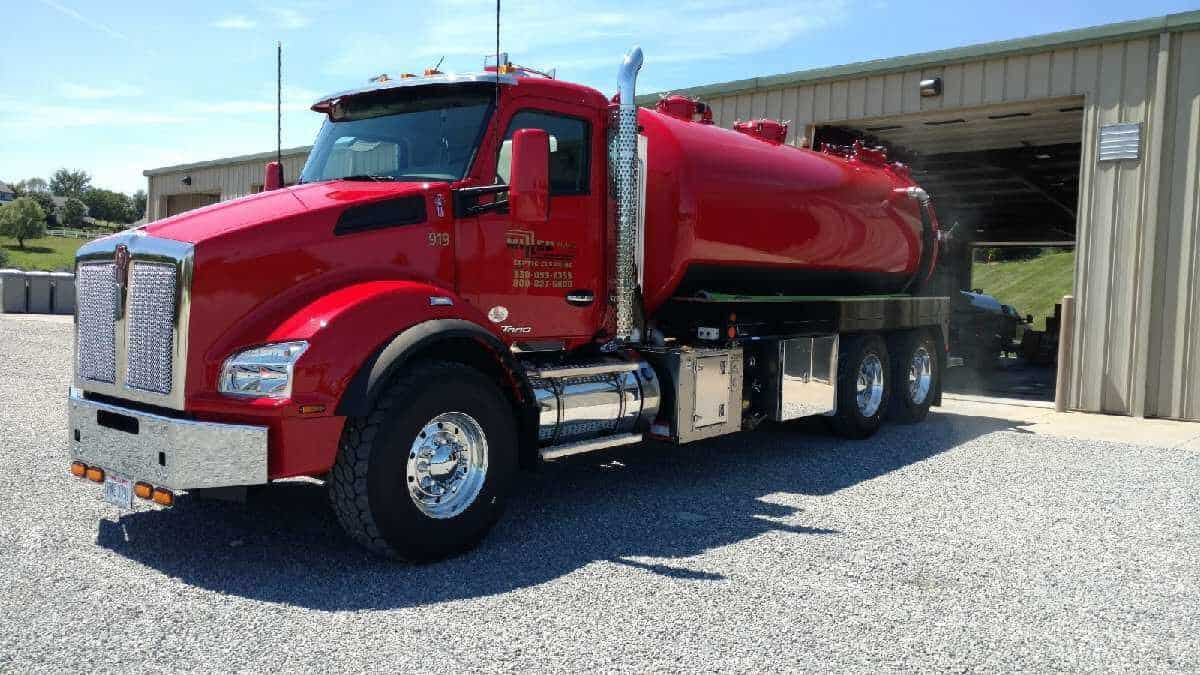
Serving Residential And Commercial Septic Services in the folllowing areas:
Frequently Asked Questions
How often should a residential septic tank be pumped in Northeast Ohio?
Most households need pumping every three to five years. The exact interval depends on tank capacity, the number of people in the home, and whether a garbage disposal is used.
A 1,000-gallon tank serving four people typically reaches capacity in about three years. A two-person household with the same tank may go five years or longer.
Homes with water softeners discharging into the tank, or those using laundry-heavy schedules, often need service on the shorter end of that range. We can check sludge and scum depths during a visit and give you a schedule based on measurements rather than guesswork.
What is included in professional septic system maintenance service?
Our maintenance visits cover more than emptying the tank. A standard service includes:
- Pumping both compartments of the tank down to the bottom
- Measuring sludge and scum layers before removal
- Inspecting the inlet and outlet baffles or tees for damage
- Checking the tank lid, seals, and access risers for cracks
- Looking at the distribution box for level flow and settling
- Observing the drain field surface for saturation, odor, or lush growth
We also note the tank’s condition and give you a written record of the service date, which is useful for county health department files and future property sales.
Can leach line rejuvenation restore a slow or failing drain field?
In many cases, yes. Leach lines fail when a biomat layer of organic solids seals the soil interface, preventing effluent from percolating away. Rejuvenation uses high-pressure jetting and aeration to break up that layer and clear the perforated pipe.
This works best when the soil itself is still capable of accepting water and the lines have not collapsed. Systems that have failed because of root intrusion, crushed pipe, or a high water table usually require replacement instead.
We evaluate the drain field first and tell you honestly whether rejuvenation is a reasonable option. When it is, it costs a fraction of a full leach field replacement.
What is required for a septic point-of-sale inspection in Ohio?
Requirements are set at the county level under Ohio Administrative Code 3701-29, so specifics vary between Wayne, Holmes, Stark, and Summit counties. Most local health departments require an evaluation before a property transfer.
A typical inspection includes locating the tank, pumping it, checking baffles and structural condition, and assessing whether the drain field is accepting flow. Some counties require dye testing or a flow test.
We perform these inspections and submit the documentation your health department requires. Scheduling early in the transaction gives you time to address any repairs before closing.
How can a septic tank be located if its access lid is buried?
We use several methods depending on the property. A transmitter probe fed through a cleanout or the house line sends a signal that we track above ground with a receiver, marking the tank’s position and depth.
When that is not practical, we use soil probes along the line exiting the house foundation, working outward until we contact the tank. Older county permit records and as-built drawings often narrow the search area significantly.
Once located, we mark the lid position so future service visits do not require the same search. Many homeowners choose to add a riser at that point.
When should septic tank risers be installed, and what are their benefits?
Risers make sense any time the tank lid sits more than a few inches below grade. If your last pumping required digging, installation will pay for itself over the life of the system.
A riser is a plastic or concrete cylinder that extends from the tank lid to ground level, sealed with a gasketed cover. Benefits include:
- No excavation at each pumping, which lowers service cost
- Faster inspections, since baffles and liquid levels are visible immediately
- Less lawn damage from repeated digging
- Safer access, with a secured, lockable lid that meets code
We install risers during a scheduled pumping visit, since the tank is already exposed. Installation typically takes under an hour once the lid is uncovered.
Call Us Today
7257 Old Rt. 39 NW
Sugarcreek, OH 44681
224 E Liberty St,
Wooster, OH 44691
Main Number: (330) 295-3658
Wooster: (330) 521-3599
Call Us Today
Sugarcreek, OH 44681
Toll Free:
(844) 390-3388
Holmes County:
(330) 893-2355
Wayne County:
(330) 263-9331