
Drain Cleaning Services in Northeast Ohio
A slow sink, a gurgling toilet, or water backing up in the basement usually points to a blockage somewhere between the fixture and the main line. We clear clogs in kitchen, bathroom, laundry, floor, and main sewer drains using camera inspection to locate the problem and hydro jetting to remove grease, sludge, scale, and tree roots from the pipe walls.
Root intrusion is one of the most common causes of repeat backups in older Northeast Ohio homes, and cutting through roots without cleaning the full pipe diameter tends to buy only a few months. A camera inspection shows exactly what is inside the line, which lets us recommend the right approach instead of guessing.

Drain Problems We Solve
Most service calls we take in Northeast Ohio fall into three categories: grease and detergent buildup in kitchen and laundry lines, hair and soap scum in bathroom fixtures, and root or debris blockages in the main sewer line. Each type has a different cause, a different clearing method, and a different risk if it is ignored.
Kitchen/Laundry Line Clogs
Kitchen drains clog because fats, oils, and grease cool inside the pipe and harden against the walls. Over months, the interior diameter of a 1.5-inch or 2-inch line narrows until water backs up into the sink basin.
Laundry lines fail for a related reason. Detergent residue, lint, and fabric softener combine into a sticky film that catches on pipe joints and standpipe elbows.
Warning signs we hear about most often:
- Water draining slowly on one side of a double-basin sink
- Gurgling from the disposal when the dishwasher discharges
- A washing machine standpipe that overflows mid-cycle
- Sour odors near the sink cabinet
Cabling clears the immediate blockage. Hydro jetting scours the pipe wall back to full diameter, which is what we recommend when grease has been accumulating for years.
Bathroom Drain Backups
Tub, shower, and lavatory drains collect hair bound together with soap scum and toothpaste. This mass tends to catch on the crossbars of the strainer or on the P-trap and grows from there.
Toilets are different. They block from non-flushable wipes, feminine products, excess paper, or a foreign object dropped into the bowl.
| Symptom | Likely Cause |
|---|---|
| Standing water in the shower pan | Hair mat in trap or branch line |
| Slow lavatory sink only | Pop-up stopper buildup |
| Toilet rises then drains slowly | Partial obstruction in trapway or branch |
| Multiple bathroom fixtures backing up | Blockage past the fixtures, in the branch or main |
That last row matters. When more than one fixture is affected at the same time, the problem is usually downstream, and a camera inspection tells us where.
Main Sewer Line Blockages
The main line carries everything from the house to the septic tank or municipal connection. When it blocks, wastewater has nowhere to go and surfaces at the lowest opening — typically a basement floor drain or a first-floor shower.
Root intrusion is the leading cause we find in older Wayne, Holmes, and Stark County properties. Maple, willow, and silver maple roots enter through hairline cracks and joint gaps in clay or cast iron pipe, then expand until they trap solids.
Other common causes include:
- Pipe bellies — sags that hold standing water and sediment
- Offset joints from soil movement or settling
- Collapsed sections in clay tile lines installed before the 1970s
- Flushed debris that lodges at a transition or bend
We run a camera to identify the cause and its distance from the cleanout before recommending a fix. Cabling with a root-cutting head or hydro jetting restores flow; if the camera shows a break or collapse, cabling will not hold and the pipe needs repair.
Drain Types We Service
Our crews clear blockages in kitchen and bath lines, restaurant grease waste, floor drains, and buried exterior pipe across Northeast Ohio. Each line type has its own diameter, slope, and failure pattern, so we match the equipment and access point to the drain in front of us.
Residential Drain Lines
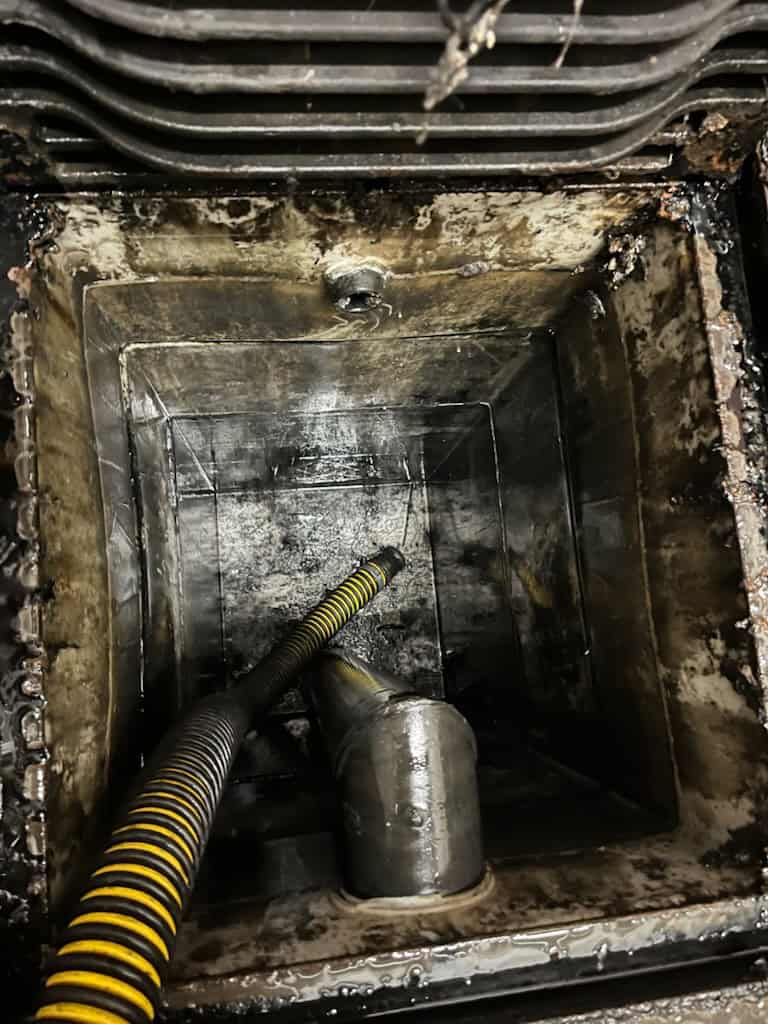
Most home calls involve one of a handful of lines, and the fix depends on which one is backing up.
- Kitchen sink lines (1.5″–2″) — grease and food solids narrow the pipe over time, especially at long horizontal runs to the stack.
- Lavatory and tub drains (1.25″–2″) — hair and soap scum bind together at the trap and just past it.
- Toilet branch lines (3″) — wipes, hygiene products, and paper buildup are the usual culprits.
- Main sewer lateral (4″–6″) — the line from the house to the septic tank or city main, where roots and pipe defects show up.
- Basement floor drains and laundry standpipes — often the first place to overflow when the main is restricted.
We cable smaller branch lines and use larger drum machines or jetting on mains. On homes with clay or Orangeburg pipe, common in older Wayne, Holmes, and Stark County housing, we recommend a camera run after clearing to check for offsets and collapsed sections.
Commercial Drain Systems
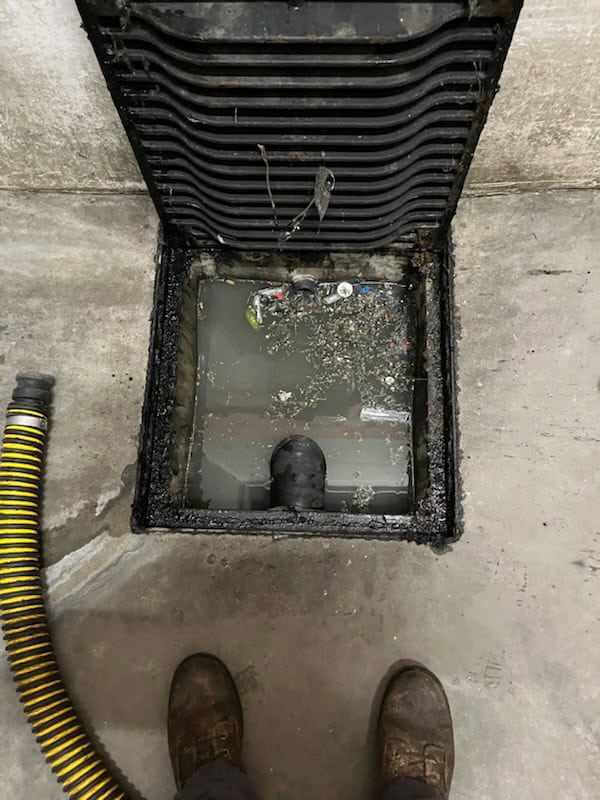
Commercial lines carry heavier and more consistent loads, so cleaning intervals matter more than they do at a house.
Restaurants, schools, nursing homes, and manufacturing facilities typically deal with grease waste lines, grease interceptor outlets, mop sink drains, and trench or floor drains in kitchens and shops. Fats cool and harden on pipe walls, and by the time flow slows, the line may be half its original diameter.
We handle:
| Line or fixture | Common issue | Typical approach |
|---|---|---|
| Grease waste lines | Hardened FOG buildup | Hydro jetting, scheduled |
| Interceptor inlet/outlet | Solids and sludge | Pumping plus jetting |
| Floor and trench drains | Sediment, debris | Jetting, vacuum removal |
| Main building sewer | Roots, wipes, scale | Camera, cable or jet |
We schedule work around service hours and coordinate with property managers on multi-tenant buildings so one tenant’s blockage doesn’t shut down the rest.
Storm And Exterior Drains
Exterior drainage lines are separate from sanitary waste, and neglecting them tends to show up as standing water or a wet basement.
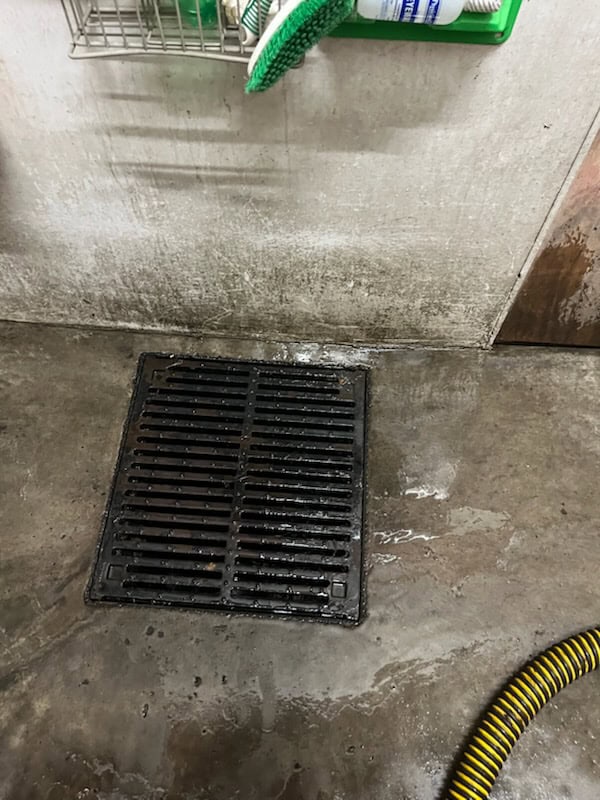
We clear downspout leaders, catch basins, area drains, driveway trench drains, and buried corrugated or PVC storm lines. These pipes fill with leaves, silt, roof grit, and root mass, and because they run at shallow depths, they are frequent targets for tree roots seeking moisture.
Curtain drains and footer tile around foundations also clog with sediment. Jetting from a cleanout or catch basin flushes the accumulated material out rather than just punching a hole through it.
Freeze-thaw cycles in this region crack and separate storm pipe joints. When a line clogs repeatedly, we camera it to locate the break before recommending any repair.
Advanced Diagnostic and Cleaning Methods
Clearing a drain is only part of the job — knowing why it clogged determines whether the fix lasts a month or a decade. We combine in-pipe video inspection with two distinct clearing methods, matching the tool to the blockage, the pipe material, and the age of the system.
Video Camera Inspections
We feed a waterproof camera head on a flexible push rod through a cleanout, floor drain, or roof vent to view the interior of the line in real time.
This shows exactly what a plunger or auger can’t: hairline cracks, bellied sections holding standing water, offset joints at clay tile connections, scale buildup, and root masses pushing through seams.
A locating transmitter in the camera head lets us mark the depth and position of a problem on the surface, so excavation — if it’s needed — is targeted rather than exploratory.
When we recommend a camera inspection:
- Repeat backups in the same fixture or main line
- Before a real estate transfer on an older property
- After clearing a stubborn blockage, to confirm the line is clear
- When a septic system backs up and the cause isn’t obvious at the tank
Hydro Jetting
Hydro jetting uses water pressure — commonly in the 1,500 to 4,000 PSI range depending on the line — delivered through a nozzle with rear-facing jets that propel the hose forward while scouring the pipe wall.
Unlike a cable, which punches a hole through a blockage, jetting removes the full circumference of buildup: grease, soap scum, sludge, mineral scale, and fine root hairs.
That makes it the preferred method for restaurant grease lines, laundry lines, and septic tank inlet and outlet pipes coated with years of accumulation. Our septic tank pumping and commercial septic cleaning services can also help keep septic systems operating properly and reduce buildup-related problems.
We inspect pipe condition first. Fragile Orangeburg, deteriorated cast iron, or cracked clay may not tolerate high pressure, and we’ll recommend mechanical clearing or repair instead.
Mechanical Snaking and Augering
Cable machines remain the fastest and most economical option for a straightforward obstruction — a hairball in a bathroom sink, a toy in a toilet trap, a solid mass in a kitchen branch line.
We size the cable and cutting head to the pipe:
| Line Type | Typical Diameter | Common Approach |
|---|---|---|
| Sink, tub, lavatory | 1.5″ – 2″ | Small drum machine, hand-fed cable |
| Toilet, branch line | 3″ – 4″ | Mid-size machine with spade or retrieval head |
| Main sewer, septic lateral | 4″ – 6″ | Sectional machine with root-cutting blade |
For root intrusion, a rotating cutter head shears growth back to the pipe wall and restores flow immediately. Roots regrow, so we often pair the initial cut with jetting and a camera pass to identify the entry point.
Root Intrusion And Sewer Line Protection
Tree roots are one of the most common causes of recurring sewer backups in Northeast Ohio, where clay tile laterals and mature maples, willows, and silver maples share the same ground. Recognizing the early symptoms, choosing the right removal method, and scheduling follow-up service are what keep a rooted line from turning into an excavation project.
Signs Of Tree Root Damage
Roots enter through hairline cracks and loose joints, then expand into a mat that catches paper and grease. The symptoms build gradually, so homeowners often notice a pattern before a full blockage.
Watch for:
- Gurgling toilets or drains that bubble when a washing machine discharges
- Multiple fixtures draining slowly at once, especially basement floor drains and first-floor toilets
- Backups that return every few months after snaking clears them temporarily
- Sewer odor near floor drains or in the yard
- Unusually green, fast-growing grass along the lateral route
Homes built before 1970 with clay or Orangeburg pipe are the most affected. If your line has needed clearing more than once in two years, roots are the likely reason rather than a one-time clog.
Root Removal Options
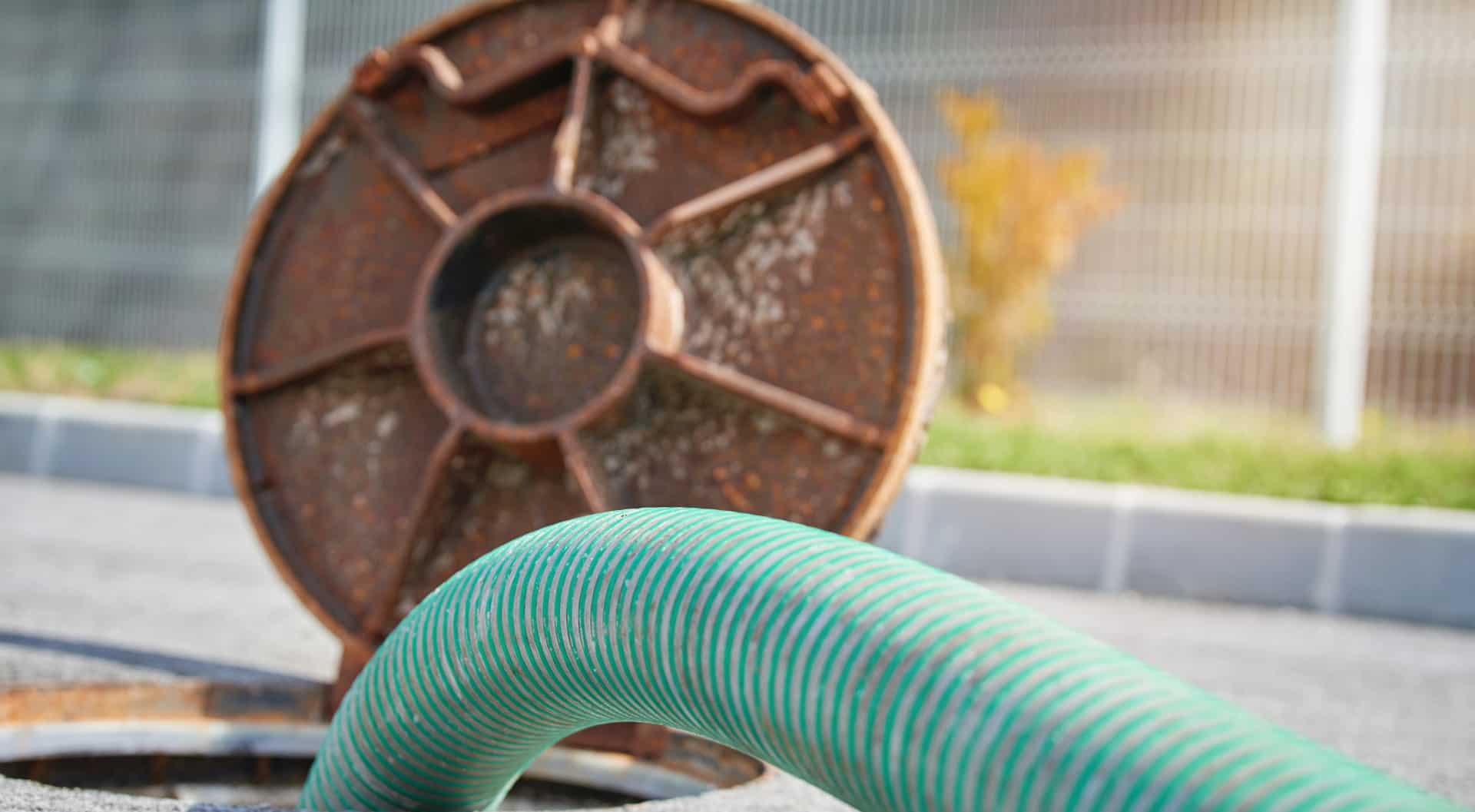
We match the method to the severity of the intrusion and the condition of the pipe.
| Method | Best For | What It Does |
|---|---|---|
| Mechanical rodding (snaking) | Emergency clearing, active backups | Cuts a channel through the root mass to restore flow quickly |
| Hydro jetting | Heavy root mats, grease combined with roots | Uses 3,000–4,000 PSI water to scour roots back to the pipe wall and flush debris |
| Camera inspection | Diagnosis after clearing | Confirms how much root remains, locates entry points, and measures depth |
| Spot repair or lining | Isolated cracked joints | Seals the entry point so roots cannot return at that location |
| Lateral replacement | Collapsed or badly offset clay pipe | Replaces the failed section with PVC |
Rodding restores flow. Jetting removes more material and leaves a cleaner pipe wall, which is why we usually recommend it when roots are the confirmed cause.
Chemical root foams can slow regrowth but do not repair the crack that let roots in.
Recommended Follow-Up Care
Root removal is maintenance, not a permanent fix, unless the pipe defect is repaired.
We suggest a camera inspection immediately after clearing so you can see the pipe’s actual condition and decide whether lining or repair makes financial sense. That footage also gives you a baseline to compare against next time.
For lines with confirmed root activity, cleaning every 12 to 24 months is typical, with annual service for heavily wooded lots.
A few practical steps help between visits:
- Avoid planting trees or shrubs within 10 feet of the lateral route
- Keep a copy of your line location and inspection video
- Address slow drains early rather than waiting for a backup
- Note the date of each cleaning to track how quickly roots return
If regrowth shortens the interval between cleanings each cycle, that usually signals the pipe defect has widened and repair should be evaluated.
Emergency Response And Service Pricing
A backed-up main line or an overflowing floor drain needs attention within hours, not days. Below we outline the warning signs that justify an emergency call, the variables that shape your final invoice, and how to get a truck scheduled across our Northeast Ohio service area.
When To Request Immediate Help
Some drain problems can wait until the next business day. Others cannot.
Call us right away if you notice:
- Sewage backing up into tubs, showers, or floor drains — this indicates a blockage in the main line, not a single fixture.
- Every drain in the house draining slowly at once, often paired with gurgling toilets.
- Standing water near the septic tank or drain field after normal water use.
- A basement floor drain overflowing during laundry or dishwasher cycles.
Single slow sinks, minor tub backups, and periodic gurgling usually point to a localized clog. Those are worth scheduling during regular hours at standard rates.
If your home is on a septic system, stop running water immediately and call. Continued use pushes more waste into an already full line.
Factors That Affect Your Estimate
We quote drain cleaning based on the work required, not a flat guess over the phone. Several variables move the number:
| Factor | Effect on Cost |
|---|---|
| Method | Cable snaking is the lower-cost option; hydro jetting costs more but removes grease and root mass from pipe walls |
| Access point | An existing cleanout is straightforward; pulling a toilet or accessing through a roof vent adds labor |
| Line length and diameter | Longer main lines and larger commercial pipe take more time and equipment |
| Camera inspection | Adds cost, though it often prevents repeat visits by identifying the real cause |
| Timing | After-hours, weekend, and holiday calls carry a premium over weekday scheduling |
| Severity | Full blockages with sewage present require more cleanup time than partial clogs |
Root intrusion and collapsed pipe sections are separate matters. If the camera shows structural damage, we explain what we found and what repair would involve before any additional work begins.
We confirm pricing with you before starting. No work proceeds without your approval.
Scheduling Service In Northeast Ohio
Frequently Asked Questions
Drain problems in Northeast Ohio homes and businesses usually come down to a few causes: grease buildup, tree roots, collapsed clay tile, or improper slope. Below are answers to the questions we hear most often about camera inspections, hydro jetting, emergency service, and what drives the final price.
What types of drains can professional drain cleaning services clear?
We clear kitchen sinks, bathroom sinks, tubs, showers, toilets, floor drains, laundry standpipes, and main sewer lines. On the commercial side, that also includes grease lines, mop sink drains, and catch basins.
Line size matters more than fixture type. Small branch lines under 2 inches typically need a compact cable machine, while 4-inch and 6-inch main lines call for a sectional or drum machine with cutting heads.
Downspout and yard drains are also common calls, particularly on older properties where storm tile has silted in.
How does a camera inspection help identify the cause of a drain or sewer backup?
A camera inspection puts a live video feed inside the pipe so we can see the actual condition rather than guess from symptoms. That tells us whether we’re dealing with grease, roots, a belly holding water, a broken section, or an offset joint.
The camera also carries a transmitting sonde, which lets us locate the trouble spot on the surface and mark its depth. If a repair or excavation is needed, that mark keeps digging limited to one area.
We recommend inspection after any repeat backup, before a home purchase, and after clearing a line to confirm the pipe is actually open and not just temporarily flowing.
When is hydro jetting the best option for clearing a clogged sewer line?
Hydro jetting uses high-pressure water through a directional nozzle to scour the pipe wall. It’s the better choice when the blockage is grease, soap scum, sludge, or scale — material a cable will punch a hole through without removing.
Restaurant kitchen lines and commercial grease lines are the clearest candidates. So are residential mains where the camera shows a coating of buildup rather than a single obstruction.
Jetting isn’t right for every line. Fragile or already-cracked Orangeburg and old clay pipe may not tolerate the pressure, which is one reason we prefer to inspect first when the pipe’s condition is unknown.
Can tree roots cause recurring sewer line clogs, and how are they removed?
Yes. Roots find their way in through joints and hairline cracks in clay and cast iron pipe, then grow into a mat that traps paper and solids. Maple, willow, and silver maple near a sewer run are frequent culprits in this region.
We remove roots mechanically with a cable and cutting blade, or with a jetter using a root-cutting nozzle for a more complete cleanout.
Cutting roots doesn’t stop them from returning. Because the entry point remains, most root-affected lines need cleaning on a schedule — often annually — until the damaged section is lined or replaced.
Do you offer emergency drain cleaning for backups and overflowing drains?
We respond to emergency calls for sewage backing up into basements, overflowing floor drains, and main line stoppages that take every fixture in the building out of service.
If wastewater is actively coming up, stop running water at all fixtures, including washing machines and dishwashers, and call. Reducing flow into the line limits how much comes back up while we’re on the way.
For commercial accounts, we understand a blocked line can stop service entirely, and we prioritize calls accordingly.
What factors affect the cost of professional drain cleaning services?
Several variables drive the price:
- Type of line — a branch fixture drain is a smaller job than a main sewer line.
- Access — an accessible cleanout costs less to service than pulling a toilet or reaching a roof vent.
- Method — cabling generally costs less than hydro jetting, which requires more equipment and water volume.
- Camera inspection — added when diagnosis or documentation is needed.
- Timing — after-hours and weekend emergency calls carry different rates than scheduled service.
- Severity — heavy root masses and hardened grease take longer than a simple soft stoppage.
We’ll give you a clear price before work begins, and if the camera reveals a broken or collapsed pipe that cleaning can’t fix, we’ll tell you that instead of running the machine again.
Call Us Today
7257 Old Rt. 39 NW
Sugarcreek, OH 44681
224 E Liberty St,
Wooster, OH 44691
Main Number: (330) 295-3658
Wooster: (330) 521-3599
Call Us Today
Sugarcreek, OH 44681
Toll Free:
(844) 390-3388
Holmes County:
(330) 893-2355
Wayne County:
(330) 263-9331