Commercial septic systems require more frequent pumping, larger capacity equipment, and stricter documentation than residential systems, which is why we provide scheduled maintenance, grease trap cleaning, high-volume pumping, and inspection services built around the demands of businesses across Northeast Ohio.
We work with restaurants that need grease traps serviced on a regular cycle to stay compliant and avoid backups during service hours. We also support property managers overseeing apartment complexes, mobile home parks, and multi-unit developments where a single system failure affects dozens of tenants at once.
Municipal facilities, campgrounds, and public buildings depend on consistent pumping schedules and accurate service records. Industrial sites bring their own requirements, from holding tank management to lift station cleaning and wastewater handling on active work sites.
Our team has served Northeast Ohio businesses for more than 30 years, and we understand that downtime costs money.
A 60-seat diner, a 200-unit apartment complex, a township park building, and a machine shop all send waste into the ground, but the volume, composition, and pumping schedule differ significantly in each case.
Fats, oils, and grease (FOG) are the primary concern in food service. When grease escapes the trap and reaches the tank, it forms a hardened scum layer that reduces effective capacity and can seal off the leach field.
Most restaurants we service need grease trap cleaning every 30 to 90 days, depending on menu and volume. Fryer-heavy kitchens sit at the shorter end of that range.
Septic tanks at restaurants typically require pumping two to four times more often than a comparable residential system. We recommend keeping manifest records for each cleaning, since many local health departments request them during inspection.
Signs your interval is too long include slow floor drains, odors near the trap, and standing water over the absorption field.
Apartment complexes, mobile home parks, and multi-tenant office buildings share one challenge: no single occupant notices a developing problem until it becomes a backup affecting several units.
We build service calendars around unit count and documented water usage rather than guesswork. A rough planning reference:
| Property Size | Typical Pumping Interval |
|---|---|
| 4–10 units | Every 12–18 months |
| 11–30 units | Every 6–12 months |
| 30+ units or park systems | Every 3–6 months |
Beyond pumping, we handle riser installation so future service does not require digging, camera inspection of shared laterals, and documentation for ownership transfers or lender requirements.
Scheduled service also gives property managers a predictable line item instead of emergency call-out costs.
Township buildings, road department garages, fire stations, park restrooms, and small water treatment facilities often operate systems that fall outside standard residential sizing.
Seasonal use creates a specific issue. Park facilities that sit idle from November through April can experience biological die-off in the tank, so we often schedule a spring pumping and inspection before heavy use begins.
We also support municipalities with sewer pit and lift station pumping, holding tank service at remote sites, and portable restroom placement for public events and construction projects.
Public work frequently involves prevailing wage requirements, insurance certificates, and bid documentation. We are set up to provide that paperwork.
Manufacturing plants, car washes, machine shops, and agricultural operations generate wastewater that differs chemically from domestic sewage.
Solvents, coolants, heavy metals, and high solids loads can kill the bacteria a septic system depends on, or fall under separate disposal rules entirely. Before we pump, we confirm what is in the tank.
Two regulatory points matter here. Systems serving 20 or more people per day that receive only sanitary waste fall under EPA Class V large-capacity septic system rules. Systems receiving industrial process waste are generally prohibited from disposing into the ground and require permitted treatment.
We coordinate sampling, licensed disposal at approved facilities, and interceptor or settling tank service for wash bays and shop floors.
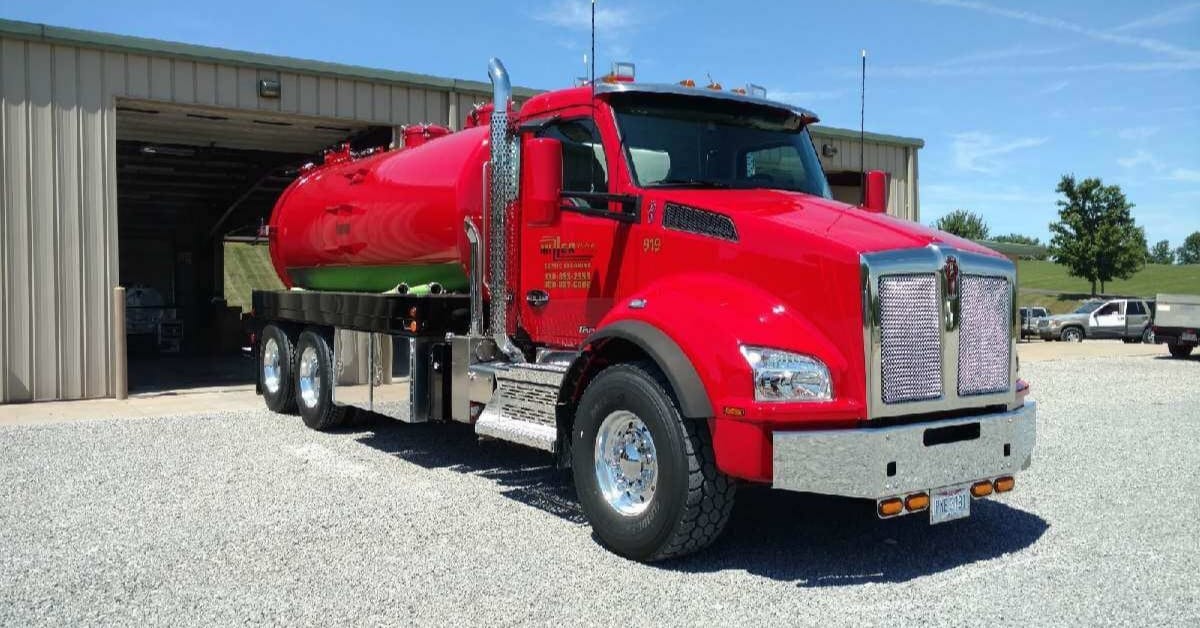
Commercial septic systems fail on their own timeline, not yours, which is why we build pumping schedules around actual usage data and keep inspection records on file. When something does go wrong, our trucks are dispatched across Northeast Ohio for grease trap overflows, tank backups, and lift station failures.
We set pumping intervals based on tank capacity, daily flow, and the type of waste entering the system — not a generic calendar reminder.
Typical schedules we manage:
| Facility Type | Common Interval |
|---|---|
| Full-service restaurants (grease traps) | Every 30–90 days |
| Multi-unit apartment complexes | Every 6–12 months |
| Office buildings and retail | Annually |
| Campgrounds and seasonal venues | Before and after peak season |
| Industrial catch basins | Quarterly to semiannually |
For property managers running several buildings, we consolidate service dates so one crew handles multiple addresses in a single visit. That reduces trip charges and keeps your maintenance log consistent.
We also track effluent filter cleanings and note tank condition at each visit, so baffle deterioration or drainfield saturation gets flagged before it becomes a replacement job.
Ohio county health districts and local sewer authorities require proof of maintenance for commercial systems, and food service operations often face separate grease trap manifest requirements.
We provide after each service:
Records stay on file with us, so if an inspector asks for two years of pumping history, we can produce it without you searching through invoices.
For municipal sludge hauling and industrial waste, we confirm the receiving facility accepts the material before the truck is loaded. That avoids rejected loads and the delays that follow.
Backups in a commercial building shut down operations quickly — a restaurant with a flooded floor drain cannot serve, and an apartment building with sewage in the basement creates immediate liability.
We prioritize emergency calls involving:
On arrival, we pump the tank or trap to relieve pressure, then locate the cause. Sometimes it is a full tank; other times it is a collapsed line, a failed pump, or a saturated leach field.
We carry equipment for tank location, drain cleaning, and leach line rejuvenation, so many calls are resolved in one visit rather than requiring a second contractor.
Miller of Holmes provides reliable septic services for homes and businesses throughout Northeast Ohio. See the areas we serve to find out if our team is available in your community.
Most commercial systems need pumping every 3 to 12 months, which is far more frequent than the 3 to 5 year cycle typical of a single-family home.
The interval depends on daily flow volume, tank capacity, and what’s entering the system. A restaurant with a 1,500-gallon tank and heavy dishwashing may need quarterly service, while a small office building with 10 employees might go a full year.
We recommend starting with a baseline inspection. After we measure sludge and scum layers on a few visits, we can set a realistic schedule instead of guessing.
Ohio Administrative Code 3701-29 requires that sewage treatment systems be maintained so they don’t discharge improperly treated sewage. Local health districts in Wayne and Holmes counties may also require documented service records for permitted commercial systems.
Sizing is based on estimated daily sewage flow, and Ohio uses per-fixture and per-occupant calculations rather than square footage.
A few common benchmarks:
| Facility Type | Typical Flow Basis |
|---|---|
| Restaurant with seating | 25–40 gallons per seat, per day |
| Office building | 15–20 gallons per employee, per day |
| Apartment unit | 100–150 gallons per bedroom, per day |
| Campground | 30–50 gallons per site, per day |
| Church or assembly hall | 3–5 gallons per seat, per day |
Tank capacity generally needs to hold at least two days of design flow, with larger systems often using multiple compartments or tanks in series.
We don’t design systems, but we work regularly with installers and county health departments, and we can tell you whether your existing tank is undersized for your current usage based on how quickly it fills.
Food service operations on septic need a properly sized grease interceptor between the kitchen and the septic tank. Grease that reaches the tank hardens, migrates into the leach field, and causes failures that cost far more than routine service.
Most local jurisdictions expect grease traps to be cleaned when solids and grease reach 25% of the trap’s capacity. In practice, that means:
We pump the full contents rather than skimming the surface, then scrape the walls and baffles. Partial pumping leaves hardened material that reduces effective capacity between visits.
We also provide dated service tickets and manifests for your records, which health inspectors typically ask to see.
We set up recurring service agreements that cover multiple addresses under one account. You give us the property list, tank locations, and access notes, and we handle the calendar.
This works well for:
Billing can be consolidated into a single monthly or quarterly invoice, or split by property if you’re passing costs through to owners.
For point-of-sale transactions, we also perform septic inspections required when a property changes hands in Ohio. Property managers handling turnovers often bundle these with routine pumping visits to save a trip charge.
If a tenant reports a backup, we prioritize those calls and coordinate access directly with them when you authorize it.
Township and village facilities present a specific pattern: long periods of light use punctuated by heavy demand. Park restrooms, fairgrounds, and community centers all follow this cycle.
We service:
Public entities usually need documentation for audits and budget records. We provide itemized invoices, volume records, and disposal manifests showing where material was taken.
We can also work under annual bids or contracts when your entity requires a formal procurement process.
Industrial systems require knowing exactly what’s in the waste stream before a truck arrives. We ask for a description of the discharge and any relevant safety data sheets during scheduling.
Our equipment handles high-volume jobs, and we coordinate multiple truck loads for large tanks and lagoons. For facilities with pretreatment systems, we service settling tanks, sludge holding tanks, and separators.
Disposal is where compliance matters most. Non-domestic waste can’t go to the same receiving facility as residential septage, so we identify a permitted disposal site that accepts the specific material and provide the manifest documenting the chain of custody.
If your facility operates under an Ohio EPA permit, we can align service intervals and recordkeeping with your reporting requirements.
For systems showing reduced absorption, we offer leach line rejuvenation, which can restore flow in fields clogged with biomat before replacement becomes necessary.
Call Us Today
7257 Old Rt. 39 NW
Sugarcreek, OH 44681
224 E Liberty St,
Wooster, OH 44691
Main Number: (330) 295-3658
Wooster: (330) 521-3599
Call Us Today
Toll Free:
(844) 390-3388
Holmes County:
(330) 893-2355
Wayne County:
(330) 263-9331